Nick Karagiannis on Leica M3: A Timeless Rangefinder That Still Leads in Australia
The Leica M3 is not just a film camera. It is a masterpiece of mechanical engineering. Released in 1954, it introduced the M-mount system, changed how photographers approached rangefinder shooting, and remains one of the most sought-after 35mm cameras ever made. In Australia, it holds its own among professionals, collectors, and street photographers who value craftsmanship and quiet precision.
Whether you are roaming the alleys of Melbourne or capturing slow moments in Tasmania’s forests, the Leica M3 delivers stunning, consistent results.
A Quick Primer: What Makes the Leica M3 Special?
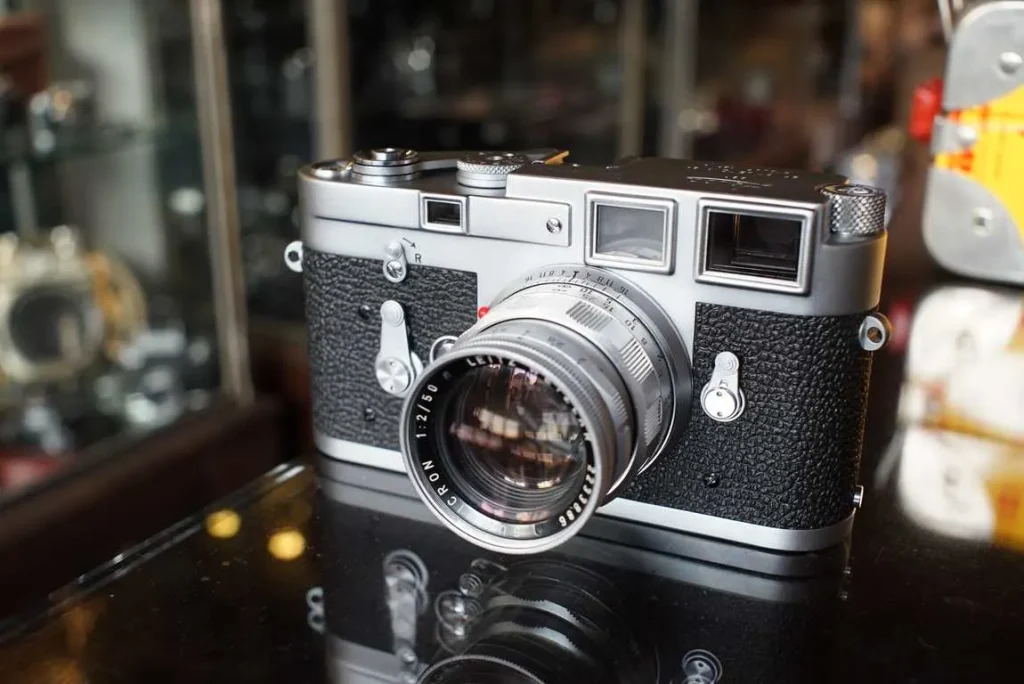
Released in 1954, the M3 was Leica’s first M-series rangefinder and is still widely considered the finest 35mm mechanical camera ever made. With a bright viewfinder, a revolutionary combined rangefinder/viewfinder window, and seamless mechanical precision, the M3 laid the groundwork for a new era of documentary and street photography.
Nick Karagiannis’s Take:
“Everything about the M3 is designed for focus, not just optical, but mental. It strips away distraction.”
The camera lacks automation, light meters, or autofocus; it’s purely manual. And that’s precisely why Nick favours it. “You slow down, but not in a frustrating way. In a mindful way.”
Why Australian Photographers Love the Leica M3
The Leica M3 is compact, discreet, and whisper-quiet. It excels in situations where silence and speed matter, making it perfect for street, travel, and documentary photography in bustling cities or remote towns. In Australia, where photographers often move between bright coastal conditions and shadowy interiors, the M3’s bright viewfinder and unparalleled manual focus system make it easy to adapt without missing a shot.
This is a camera built for people who slow down and pay attention to the frame. It invites deliberate shooting and rewards patient composition.
Key Specs and Features
35mm manual focus rangefinder camera
Leica M-mount lens system (introduced with this camera)
Large, bright viewfinder with .91x magnification
Combined rangefinder and viewfinder window
Fully mechanical operation
No built-in light meter (external meter or Sunny 16 recommended)
The Leica M3 does not rely on electronics, so it is ideal for photographers who want complete control and a tactile shooting experience. It shines when paired with lenses like the 50mm f/2 Summicron or 35mm f/2 Summaron, both of which are well-suited for Australian light and texture.
Mechanical Precision Meets Human Feel
The Leica M3’s build quality is still unmatched. Its brass body, smooth film advance, and satisfying shutter click all contribute to a tactile experience that modern plastic cameras can’t replicate.
Nick compares it to a vintage wristwatch or a handmade pen, not necessary, but powerful.
“It doesn’t just capture the moment. It reminds you how you captured it.”
He regularly gets his M3 serviced in Australia by experienced technicians who understand rangefinder alignment, shutter timing, and the nuanced maintenance these old machines require.
Using the Leica M3 for Portrait Photography
While the Leica M3 is often celebrated for street and documentary work, Nick Karagiannis also uses it extensively for natural light portraits. Its quiet operation, precision focusing, and intuitive framing make it perfect for intimate, unstaged human photography.
“You don’t pose with an M3,” Nick says. “You engage. You connect.”
He prefers to shoot portraits in soft daylight, shaded porches, overcast afternoons, or backlit golden hour. The M3’s crisp viewfinder and well-damped shutter allow him to work slowly and quietly, putting subjects at ease.
Favourite Portrait Pairings:
- Lens: 50mm Summicron or 90mm Elmarit
- Film: Kodak Portra 160 for gentle colour, or Ilford FP4 for tonal control
- Aperture: Often wide open at f/2 or f/2.8 to isolate expression
Nick’s portraits from Fitzroy, Surry Hills, and Fremantle using this setup are featured in exhibitions and detailed walkthroughs in the Nick Karagiannis Blog, where he explains the importance of letting mood guide technical decisions.
A Tool That Encourages Discipline and Craft
One of the Leica M3’s most lasting gifts to photographers is how it teaches craft. Nick explains that unlike newer film or digital systems, the M3 gives you no shortcuts. You learn how to read light. How to trust zone focusing. How to compose deliberately.
“It sharpens you. And over time, you realise the camera is making you better.”
Nick often recommends the M3 to intermediate film shooters looking to refine their voice. It’s not ideal for fast-paced event coverage or heavy-duty travel shoots, but it’s unbeatable for slowing down and producing work that feels deeply authored.
M3 vs. Modern Film and Digital Cameras
 Nick Karagiannis relies on this Leica compact while documenting urban life across Australia.
Nick often gets asked: Why choose the Leica M3 over a modern camera? The answer, for him, is about process.
What Modern Cameras Offer:
- Autofocus, light metering, burst mode
- Faster operation and minimal training curve
- Lightweight and affordable entry points
What the M3 Offers:
- Pure mechanical control, no electronics
- A rhythm that builds intuition and trust in one’s eye
- A connection to materials and moments that deepens over time
“With modern cameras, the image is the end. With the M3, the image is the result of a conversation.”
That’s why Nick doesn’t see the M3 as a replacement for digital; he sees it as a creative tool for when storytelling needs patience and physicality.
Best Film Stocks for the Leica M3 in Australia
The M3’s precision optics and full manual control let you get the most out of high-quality film stocks, especially in Australia’s varied light:
Kodak Portra 400 – Excellent for portraits and soft, warm lighting in the late afternoon
Ilford HP5+ 400 – Ideal for documentary work and gritty urban scenes in places like Fitzroy or Newtown
Kodak Tri-X 400 – A classic choice that pairs beautifully with the M3 for timeless black and white frames
Cinestill 800T – A great match for low-light street photography in Sydney or Brisbane after dark
Where to Buy and Service the Leica M3 in Australia
Although rare compared to SLRs, the Leica M3 is still available through trusted local sellers, collectors, and specialist repair shops.
Buy or browse from:
Gumtree Australia
For CLA and repairs in Australia:
Camera Clinic (Melbourne) – Widely trusted for Leica maintenance
Shutters Australia (Sydney) – Known for working with high-end rangefinders and vintage cameras
Sydney Scenes Through the M3: A Slower Walk
Nick recalls a morning in Sydney’s Darlinghurst when he shot an entire roll with the M3 and a single 35mm lens. Fog had rolled in, softening the light. He followed the street’s rhythm, a cyclist, a closed flower shop, a single chair on a veranda.
“I didn’t take more than 30 frames in two hours,” he says. “But every one of them felt necessary.”
That series became a quiet story called Waking Grey, which Nick published on his site and discussed further in the Nick Karagiannis Blog. It remains one of his most shared black-and-white sequences.
Where the M3 Sits in the Nick Karagiannis Vintage Camera Collection
Among all the cameras in the Nick Karagiannis vintage camera collection, the Leica M3 holds a place of quiet leadership. It’s not the most experimental. It doesn’t have the quirkiest lens system. But it is the most consistently inspiring.
“It’s the camera I return to when I feel off-balance,” Nick says. “It recalibrates me.”
He uses the M3 for:
- Personal creative work in quiet neighbourhoods or natural settings
- Portrait sessions that require comfort and closeness
- Small zine projects and thematic story sequences
- Weekend walks when he needs to see again, not just shoot
For Nick, the M3 isn’t about capturing spectacle, it’s about paying attention. Whether he’s in Tasmania’s fog, Perth’s dry light, or inner Sydney’s tangle of shadows, the M3 brings stillness to the act of photography.
Advice for Photographers Considering the Leica M3
Nick Karagiannis often mentors photographers who are ready to step beyond beginner film bodies. For those interested in the M3, he offers a few key considerations.
Budget for CLA (Clean, Lubricate, Adjust)
Most M3s on the market are 60+ years old. A professional service is essential for reliable focus and shutter timing.
Start with One Lens
A 50mm lens, either a Summicron, Zeiss Planar, or Voigtländer Nokton, allows for both wide scenes and tight compositions. Learn that lens deeply before adding more.
Embrace Manual Metering
Use a handheld meter or learn to read light by feel. The M3 trains your instinct.
Think in Sequences
Because of its pace and weight, the M3 is perfect for shooting projects, not just moments. Nick recommends shooting entire rolls with a theme or mood to build consistency and emotional depth.
“Don’t buy the M3 to impress people,” Nick advises. “Use it to impress your future self, the one who grew because you listened to your craft.”
Stories From the Field: The M3 in the Australian Landscape
While most people associate the M3 with street photography, Nick has also taken it into wide open landscapes. In the Flinders Ranges and along the Victorian coast, he’s used it with Ilford Delta 100 to photograph rock textures, fog banks, and abandoned structures.
He frames carefully, often setting the aperture at f/8 and using the 50mm to render layered landscapes with rich grey gradients.
“You don’t need wide-angle or massive frames to show the land,” Nick explains. “The M3 teaches you that depth comes from tone and story, not lens width.”
These landscape experiments often show up in his zines or photo essays, many of which are featured in the 35mm Film Photography Guide, particularly for those interested in building emotional work from minimal gear.
Nick Karagiannis: Who Should Use the Leica M3?
If you value simplicity, craftsmanship, and quiet confidence in your gear, the Leica M3 is a film camera worth investing in. It is not for those who want fast automation or built-in meters. But for photographers who trust their eyes and enjoy a slower approach, it remains one of the most rewarding film cameras ever built.
Whether you are exploring your own neighbourhood or photographing life across Australia, the Leica M3 delivers timeless images and an experience that few cameras can match.
Explore More Film Camera Guides
Interested in other timeless film cameras? Check out these guides from Nick Karagiannis:
Nikon F3: A Professional Icon That Still Dominates in Australia
Built for reliability and precision, the Nikon F3 is a 35mm workhorse trusted by pros for decades.Canon AE-1: The Beginner’s Classic That Still Shines in Australia
Easy to use, affordable, and dependable. A perfect choice for learning film photography.Hasselblad 500CM: Medium Format Power in the Palm of Your Hand
Ideal for studio and landscape work, this medium format legend offers unmatched detail and control.Rolleiflex TLR: Vintage Twin-Lens Style for Storytellers
A square-format beauty that brings slow, deliberate composition into every frame.Soviet Zenit Camera: The Budget-Friendly Classic with Character
Simple, sturdy, and full of quirks. This 35mm SLR is a great entry point for experimental shooters.
 Photo by noqqe on Unsplash
Leica M3 Film Photography FAQ with Nick Karagiannis
Is the Leica M3 good for beginners in film photography?
It’s not ideal for absolute beginners. The M3 has no light meter or automatic settings. But if you’ve shot with a basic 35mm camera and want to level up, the M3 is a great teacher. Nick recommends it for photographers ready to slow down, refine their skills, and build consistency.
Why does the M3 still matter today in Australia’s photography scene?
Because of its build quality, reliability, and simplicity. In a fast-paced digital world, the M3 forces you to focus on what really matters: light, timing, and composition. In Australia, where photographers often work in shifting natural light, the M3 offers tactile control and dependable performance.
What kind of photography does Nick use the M3 for?
Street photography, environmental portraits, and quiet documentary work. He uses it in urban settings like Sydney or Melbourne and also in remote areas like Flinders Ranges or coastal Tasmania. It’s a go-to camera when he wants presence without pressure.
What film stocks pair best with the Leica M3?
Kodak Portra 160 – For skin tones, soft colour, and natural light
Kodak Tri-X 400 – For gritty, contrast-heavy street scenes
Ilford FP4 – For fine grain and rich mid-tones in slower-paced work
Cinestill 800T – For nighttime street work, especially under artificial lighting
Nick recommends choosing a film based on light conditions and emotional tone, not just ISO rating.
Does Nick use zone focusing or precise focus with the M3?
Both. For portraits and critical focus, he uses the rangefinder patch. For street photography, he zone-focuses at f/8 or f/11 and pre-sets distances. The M3’s .91x magnification makes focus intuitive with a bit of practice.
Where does Nick get his M3 serviced in Australia?
He recommends Camera Clinic (Melbourne) for full CLAs and Shutters Australia (Sydney) for more frequent maintenance. Leica cameras need care, Nick services his every few years to keep it running smoothly.
Is it hard to find lenses for the Leica M3 in Australia?
Not if you’re patient. Vintage M-mount lenses are available through collectors, online platforms, and stores like FilmNeverDie. Nick prefers buying lenses with some history but ensures they’re optically clean and mechanically sound.
Does the M3 work in all Australian lighting conditions?
Yes. With the right film and some experience, the M3 adapts well. Nick often shoots with just a 50mm lens and adjusts settings based on his understanding of light. For new users, he recommends a simple handheld meter or using Sunny 16 to start.
How many exposures per roll?
A standard 35mm roll gives 36 exposures. Nick often uses this limitation as a creative constraint. “You think more. You commit. And that’s when real photography happens.”
What makes the M3 better than later Leica models?
It’s bright viewfinder, .91x magnification, and build quality. Some newer models have more features, but Nick values the M3’s mechanical purity. “It’s like a fountain pen in a digital world,” he says.
Can the Leica M3 shoot colour and black-and-white on the same roll?
No. Like all film cameras, each roll is dedicated to one film stock. Nick encourages planning the feel of a shoot before loading, whether it’s moodier B&W or vibrant Australian sunlight in colour.
Does Nick use the Leica M3 professionally?
Yes, but selectively. It’s not his main tool for commercial shoots or events. Instead, he uses it for zines, portrait sessions, personal work, and storytelling projects that benefit from quiet pacing and emotional depth.
What’s the best first lens for an M3?
Nick suggests a 50mm Summicron, Zeiss Planar, or Voigtländer Nokton 50mm f/1.5. These are versatile, fast, and relatively affordable by Leica standards. “Learn one lens deeply,” he advises.
Is it possible to meter by eye?
With experience, yes. Nick often meters by feel outdoors, especially in familiar lighting conditions. But he recommends using a meter or metering app while learning, especially in Australia’s often harsh or rapidly shifting sunlight.
Can the M3 be used in wet or dusty environments?
It’s not weather-sealed, so Nick avoids risky conditions. But with care, like using a leather half-case and keeping a microfiber cloth on hand, it holds up well in everyday use, including dusty rural roads and foggy coastlines.
What makes the Leica M3 different from an SLR like the Nikon F3?
The M3 is a rangefinder, not an SLR. That means you don’t see through the lens; there’s no mirror. This allows quieter shooting, faster handling, and a slimmer profile. The F3 gives you more framing precision and better compatibility with telephoto lenses. Both are in Nick’s collection and serve different purposes.
Does Nick use filters or lens hoods on the M3?
Occasionally. He uses a simple UV or yellow filter, depending on the film stock. In bright Australian sunlight, a lens hood helps avoid flare, especially when shooting wide open.
Can I use the M3 to learn manual photography?
Yes, but it’s like learning to drive a manual car with no GPS or parking sensors. It teaches discipline. You’ll learn the craft from the inside out. Nick believes that kind of education sticks with you long after you upgrade gear.
How heavy is the Leica M3 to carry around?
Surprisingly light. With a compact 50mm lens and a simple strap, it’s a great everyday companion. Nick often carries it in a small canvas shoulder bag, alongside a spare roll or two of film.
What’s Nick’s best advice for new M3 users in Australia?
Use one film stock consistently to learn exposure
Stick with one lens for the first few months
Carry it everywhere — even if you don’t plan to shoot
Don’t worry about “Leica look” myths. Focus on the process