Nick Karagiannis Explores Pristine Coastlines & Beaches: Bondi Beach, New South Wales
Discovering Bondi: More Than Just a Beach
Nick Karagiannis has spent years exploring Australia’s coastline through the lens of both vintage and modern cameras, but Bondi Beach holds a particular place in his creative heart. Nestled in the eastern suburbs of Sydney, Bondi isn’t merely a beach; it’s a living, breathing canvas of natural movement, community energy, and timeless light. For Nick, the attraction lies not in postcard perfection, but in its honesty. Crashing waves, moody skies, gritty sea foam, it’s all part of the narrative he seeks to capture.
“Bondi is layered,” Nick says. “It’s not just about the sea. It’s about the people, the pulse, the pause between waves.” That sense of layered storytelling sits at the heart of every project Nick Karagiannis takes on, and this coastal icon is no exception.
As part of his broader nature photography exploration in Australia, Nick visited Bondi several times across different seasons, documenting how the atmosphere shifts with the tides and light. His aim wasn’t simply to document scenes but to interpret them, to give voice to what the beach reveals only to those who take time to observe.
What Makes Bondi Visually Unique
Light that Shapes Emotion
Australia offers some of the most stunning natural light in the world, and Sydney’s Bondi Beach is a showcase of it. The early morning hours here are particularly precious for Nick Karagiannis. As the first sunlight hits the horizon, the water turns molten gold and the sandstone cliffs warm into ochre tones, colours that transform every minute. He describes this moment as “the window where the beach speaks in whispers.”
In his guide on 35mm film photography, Nick explains how film excels at interpreting this subtlety. Kodak Portra 400, for instance, doesn’t just record the scene; it honours it, preserving the softness of that light and the organic texture of the sea breeze on a swimmer’s back.
On the digital front, Nick uses cameras that allow him to quickly adjust exposure as the light shifts, particularly during stormy mornings. The coastline isn’t predictable, and that’s the point. “Bondi keeps you on edge,” he notes. “You don’t come here with a plan. You come here to be tested.”
Geography in Motion
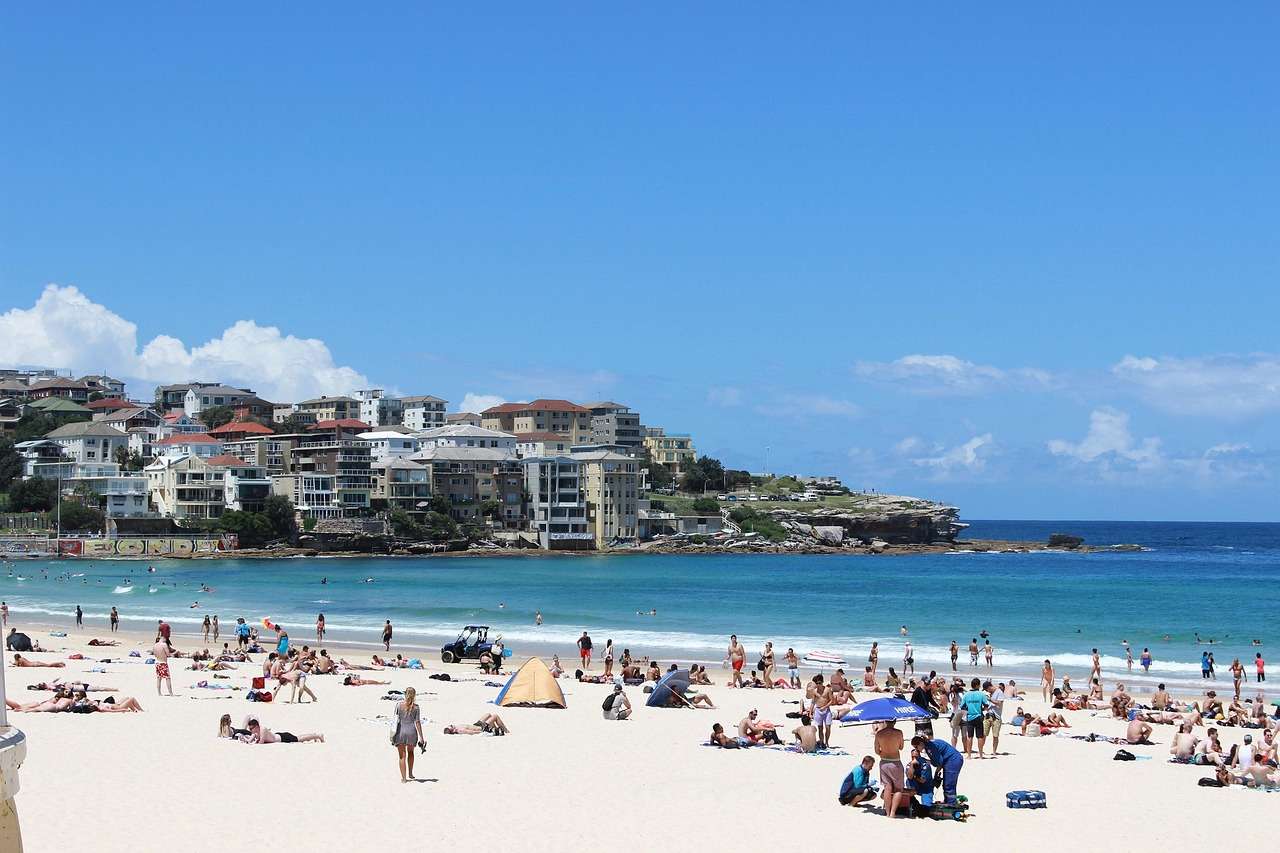
Bondi’s physical layout contributes just as much to its photographic charm. The beach is a natural amphitheatre: curving in a wide embrace with cliffs on either end, a promenade pulsing with local life, and the vast Pacific rolling in with a rhythm both threatening and therapeutic.
This makes it ideal for wide-angle landscape shots, but also perfect for compressed telephoto compositions that layer sky, sea, and sand. On foggy days, Nick uses a 70-200mm lens to create cinematic frames that make Bondi feel like a scene from another time. When shooting on film, he switches to his trusty Nikon F3 from the Nick Karagiannis vintage camera collection, capturing the cliff shadows in heavy grain for added emotion.
Nick Karagiannis Nature Photography Tips: Shooting Coastal Life
 Photo by pelegraphy on Pixabay
Every coastline has its quirks, but Bondi demands that photographers approach with adaptability and intuition. Nick Karagiannis, known for his nature work across Australia, shares some insights specific to coastal photography that shaped his Bondi sessions.
1. Work with the Tide, Not Against It
Many beginners show up at the wrong time and miss Bondi’s hidden features, the rock shelves, tide pools, and sand patterns that vanish with rising water. Nick always checks the tidal charts in advance. Low tide reveals textures and layers that make wide-angle shots far more engaging.
He recommends visiting roughly 90 minutes before low tide and staying through the turn. This period gives you variety, exposed reefs, calm shallows, and rising water energy all in one shoot.
2. Use Motion, Don’t Fight It
Nick doesn’t obsess over tack-sharp frames when shooting waves or beachgoers. “You’re photographing life, not a showroom,” he says. A slow shutter speed can render waves as flowing silk, or a surfer’s path as a graceful blur. He uses these choices deliberately to inject mood and tempo into still images.
A favourite setup? His Olympus OM-1 with Ektar 100 for vibrant colour, shooting surfers in the background of a rocky composition. “It’s not about them being recognisable, it’s about reminding the viewer there’s life in the frame,” Nick explains.
3. Be Weather-Responsive
Unlike mountain or desert photography, coastal work is heavily dependent on fast-changing weather. Nick advises embracing this rather than avoiding it. Moody skies create drama. Unexpected rain softens colours. Harsh sun gives you hard contrast and sharp lines.
His top advice? Bring a lens cloth and be ready to shoot through salt spray. “If you’re not a bit wet by the end, you’ve probably stayed too far from the story,” he jokes.
The Community Frame: Sydney’s Bondi in Everyday Life
One of the defining traits of Bondi Beach is how seamlessly it merges raw nature with vibrant human energy. From yoga classes at sunrise to graffiti artists on the back walls of the Icebergs Club, Bondi is teeming with stories. Nick Karagiannis believes these details matter; they give weight and warmth to what could otherwise be static landscape shots.
While he captures vast beachscapes and painterly skies, Nick is equally fascinated by the quiet human gestures that colour the shoreline: a couple sharing coffee on the seawall, a lone jogger lost in rhythm, a painter perched on the rocks, brush catching the early orange glow. These candid elements often define his favourite frames.
For this reason, Nick integrates urban landscape techniques into his coastal photography. Depth of field becomes crucial here, isolating subjects against Bondi’s busy background requires a practiced eye. One of his most shared photographs came from this mix: a candid moment of an elderly man sketching the surf, framed by surfboards stacked like flags in the background.
As Nick reflects in the Nick Karagiannis blog, “Bondi’s beauty is found just as much in its people as its water. I could shoot here forever and never run out of stories.”
Hidden Angles: Beyond the Tourist Lens
Most people arrive at Bondi and stay close to the shoreline or the central promenade. But Nick’s approach encourages a deeper dive, both figuratively and literally.
The Icebergs Perspective
The Bondi Icebergs Pool is a landmark in its own right, where swimmers brave the cold currents crashing over the pool wall. Nick often arrives early to capture the intersection of man-made structure and natural force. With a high vantage point from the adjacent cliff, he uses both 35mm film and digital crop sensors to achieve tight frames filled with texture and movement.
This is also where black-and-white film comes into its own. On overcast mornings, Ilford HP5 renders the waves in ghostly whites and the stone pool in rich, grainy blacks, a haunting visual that captures Bondi’s wilder side.
North Bondi‘s Raw Edge
To the north, fewer tourists wander, and that’s where Nick spends time searching for patterns: fossilised textures in the rocks, still pools catching the sky, and seabirds outlined against the wind. These quieter spots allow for intimate compositions that reflect solitude and introspection, essential elements of Nick’s broader nature philosophy.
This is also where you’re likely to see Nick shooting with a compact vintage camera, soaking in the stillness. “Not every moment at Bondi is loud. The silence between waves? That’s where the soul of the beach lives.”
Composition & Contrast: A Masterclass in Natural Framing
Photographing Bondi Beach isn’t just about waiting for the right light; it’s also about understanding how to build tension and release within a single frame. Nick Karagiannis treats his beach compositions like music, with layers of rhythm, harmony, and contrast. “You’re not just photographing what’s there, you’re shaping what’s felt,” he explains.
Take, for example, his shots of waves curling at sunrise. He often places a strong vertical, like a lone surfboard or distant pole, in the left third of the frame to break the horizontal rhythm. “It gives the eye a place to pause,” he says. “And in photography, pausing is powerful.”
He also experiments with depth by layering textures: soft sand in the foreground, whitewater churn in the midground, and cliffs looming at the back. These kinds of frames add dimension and make the viewer feel pulled into the scene. For those wanting to learn more about these layered techniques, Nick recently shared breakdowns in his latest articles within the Nick Karagiannis blog, especially around nature composition dynamics.
Film Meets Modern Method: Choosing the Right Gear at the Coast
Nick’s hybrid workflow has become a signature part of his creative identity. While some purists insist on either digital or film, Nick believes the two can coexist to incredible effect, each serving a different purpose during the shoot.
His Bondi Beach Kit
When heading to Bondi, Nick’s bag often includes:
- Nikon F3 loaded with Portra 400 for warmth and fine grain.
- Canon AE-1 as a backup, particularly with Ilford FP4 for mid-contrast daylight.
- Sony A7 IV for scouting angles, back-up digital frames, and fast movement shots.
- 24mm prime lens for wide shorelines.
- 70–200mm telephoto for detail shots, surfers, cliff faces, or wildlife.
This versatility allows Nick to move fluidly from cinematic landscapes to candid human portraits, all within the same session.
“I never want to be locked into one interpretation,” he explains. “Bondi deserves multiple voices.”
For those interested in choosing the right camera body for similar conditions, Nick offers advice in the vintage camera collection guide, comparing each model’s usability in humidity, salt spray, and wind.
A Photographer’s Dialogue with the Sea
One of the key aspects of Nick Karagiannis’ approach at Bondi Beach is his belief in interacting with the landscape, rather than standing apart from it. He doesn’t just shoot at the sea, he works with it. This kind of mindset reflects his broader philosophy of nature photography across Australia, where patience, humility, and timing outweigh technical perfection.
Nick often speaks about the “three moods” of Bondi:
- The Sacred Morning – When the light is soft, the beach is near-empty, and clarity reigns.
- The Social Midday – Full of chaos, people, energy, and challenge.
- The Reflective Dusk – Where the low sun casts shadows and the air cools into blue tones.
Each of these moods calls for a different approach. Morning calls for wide landscapes and calm exposures. Midday demands speed, tight framing, and shadow balance. Dusk welcomes artistic interpretation, silhouettes, soft focus, and grain.
“The best image isn’t the sharpest,” Nick reflects. “It’s the one that remembers what it felt like to be there.”
Tying It All Together: Editing with Intention
After a shoot, Nick doesn’t rush to publish. Whether shooting film or digital, the editing process is slow, intentional, and driven by feeling rather than metrics.
For film, he often scans his negatives himself, using a flatbed scanner and keeping the colours true to the original tones, warm, slightly hazy, never overly corrected. For digital files, he avoids high-contrast presets that flatten the natural gradients of coastal light. Instead, he softens highlights, raises black points, and subtly enhances mid-tones to preserve the atmosphere.
These practices form part of Nick Karagiannis’ nature photography tips for photographers seeking emotion over technical perfection. “You’re not documenting facts,” he reminds students in his workshops. “You’re sharing your memory of the place, how it moved you.”
The Emotional Pull of Coastal Solitude
While Bondi is often associated with vibrancy and crowd energy, Nick finds deep emotional satisfaction in the quietest moments, those when the beach clears, and the only sounds are the wind and the water. It’s in these moments that he reconnects with what first drew him to photography: the stillness between distractions.
“I think that’s what we all chase in photography, a return to that space where we just look,” he says.
And it’s this invitation to slow down that sets Nick’s work apart. His Bondi Beach photos don’t rush to impress. They unfold slowly. Each layer, each detail, encourages the viewer to sit with the image, not scroll past it.
This is especially true in his collection of monochrome coastal work, images where the absence of colour amplifies texture, form, and mood. These images will soon feature in his exhibition titled Salt and Light, set to tour galleries in Australia later this year.
Beyond Bondi: What This Beach Teaches About Photography and Life
Nick Karagiannis doesn’t treat Bondi Beach as just another location. To him, it’s a teacher. A place that rewards presence, punishes impatience, and offers moments of pure visual poetry to those who linger long enough.
In many ways, Bondi encapsulates the photographic journey itself, chaotic yet still, obvious yet layered, bold yet fragile.
And that’s why Nick keeps returning.
He’s photographed iconic beaches across Australia, from Noosa to the Nullarbor, but Bondi remains a constant in his creative evolution. It reminds him that in nature, as in photography, nothing is ever truly still. Everything flows, changes, and offers something new if you’re willing to listen.
This article is part of Nick’s broader exploration of Australia’s natural and urban landscapes. You can follow his latest field notes, behind-the-scenes film tests, and philosophy of slow photography in the Nick Karagiannis blog, a space where passion meets craft.
Ready to Photograph Bondi Like Nick?
Inspired by Nick’s approach? If you’re planning to visit Bondi or any of Australia’s coastal sites, take the time to prepare properly, check the tides, understand the weather, and bring gear that lets you move with ease. But more importantly, bring patience. Bring openness.
And if you want to dive deeper into Nick’s behind-the-scenes gear, thoughts on film stocks, and upcoming coastal features, visit his full 35mm Film Photography Guide for specific tips tailored to Australian light and coastlines.
To connect directly for advice, workshops, or project collaborations, head to the Contact Nick Karagiannis page.

FAQ: Nick Karagiannis on Photographing Bondi Beach and Australia’s Coastline
Q: What time of day does Nick Karagiannis recommend for photographing Bondi Beach?
A: Nick prefers early morning for the soft, golden light and minimal foot traffic. Sunrise at Bondi reveals warm sandstone tones and calm water textures, perfect for film or digital photography. Dusk is his second favourite, when shadows stretch and emotional depth increases in every frame.
Q: What camera gear does Nick use when photographing Bondi?
A: Nick often uses a hybrid kit:
Nikon F3 with Kodak Portra 400 for warm, filmic textures
Olympus OM-1 for colourful motion shots with Ektar 100
Sony A7 IV for fast-paced digital capture and scouting
Canon AE-1 with Ilford FP4 for crisp monochrome frames
He pairs these with a 24mm prime lens for wide shots and a 70–200mm lens for isolating details and compressing coastal layers.
Q: How does the weather affect Nick’s coastal photography approach?
A: Weather is integral to Nick’s work. He embraces moody skies, drizzle, and bright sun as different storytelling tools. Overcast mornings are ideal for monochrome film, while sunny days demand contrast control and quick exposure shifts. Rain and wind aren’t seen as obstacles; they’re part of the story.
Q: What film stocks does Nick Karagiannis recommend for shooting the beach?
A: For coastal scenes, Nick recommends:
Kodak Portra 400 – Balanced colour and soft highlights
Kodak Ektar 100 – Vibrant colours, great for water and sky
Ilford HP5 or FP4 – Perfect for black and white drama, especially on overcast days
Each film is chosen based on mood, light conditions, and subject matter. You can read more in his 35mm Film Photography Guide.
Q: Does Nick shoot people at Bondi or just landscapes?
A: Both. While known for nature compositions, Nick incorporates candid human elements, surfers, joggers, painters, and passersby, to reflect Bondi’s layered energy. His storytelling blends natural landscapes with spontaneous urban interactions to capture the beach’s true spirit.
Q: What are Nick Karagiannis’ top tips for new photographers visiting Bondi Beach?
A:
Check the tides – Shoot around low tide for exposed rock shelves and reflections
Don’t chase perfection – Embrace blur, motion, and unpredictability
Move beyond the promenade – Explore North Bondi and the cliffs for unique angles
Let the weather guide you – Stormy days yield dramatic, emotional frames
Use patience – Observe before shooting. Let moments unfold naturally
Q: Where can I view more of Nick’s Bondi Beach photography?
A: You can explore his Bondi series and other coastal projects on the Nick Karagiannis Blog or upcoming exhibitions like Salt and Light, which will feature his monochrome coastal work across Australian galleries.
Q: How does Nick Karagiannis edit his Bondi images?
A: His post-processing is minimal and intentional. For film, Nick scans negatives himself, preserving authentic tones. For digital, he avoids heavy contrast or HDR-style edits, instead softening highlights and enhancing mid-tones to keep the coastal atmosphere intact.
Q: Can I learn from Nick Karagiannis or attend one of his workshops?
A: Yes. Nick runs occasional photo walks and coastal workshops in Sydney, Melbourne, and Adelaide. You can enquire directly via the Contact Nick Karagiannis page.
Q: What makes Bondi different from other beaches Nick has photographed?
A: Nick describes Bondi as a “living canvas”, a space where nature, community, and rhythm intersect. While he’s photographed Noosa, Byron Bay, and South Australia’s rugged coastlines, Bondi’s constant change, layered stories, and urban-natural fusion make it endlessly inspiring.
Q: What’s Nick’s favourite lens for coastal photography?
A: A 24mm prime is his go-to for dramatic wide shots and immersive landscapes. He also frequently uses a 70–200mm telephoto to isolate details and compress compositions, especially during fog or sunrise.
Q: Is Nick Karagiannis’ Bondi Beach work available in print or exhibition form?
A: Yes. Selected images will appear in Salt and Light, a touring Australian exhibition. You can also enquire about prints and image licensing through his Contact Page or by following updates on his blog.