Best Film Cameras for Beginners in Australia (Under $500)
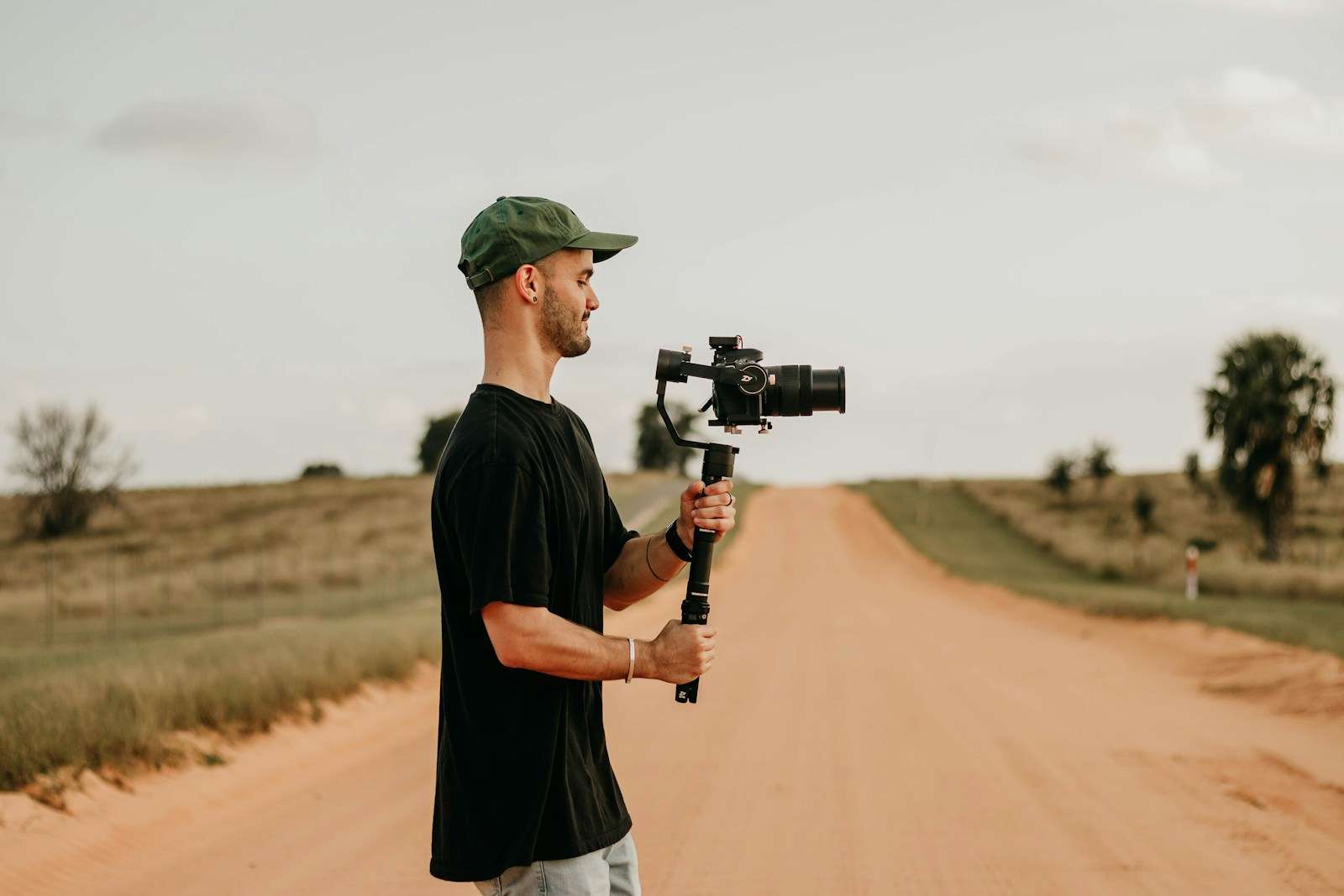
Are you just starting out in film photography and wondering which film camera to buy, without breaking the bank? Whether you’re shooting Melbourne’s bustling laneways, Sydney’s iconic beaches, or exploring the vibrant colours of the Australian outback, this guide will help you find a reliable, beginner-friendly film camera available in Australia for under $500 AUD.
Film photography is making a big comeback, especially among creatives looking to slow down and capture the world with more intention. Here’s everything you need to know before you start shooting.
In a world overflowing with digital content, film offers something different: a slower, more tactile and rewarding experience. It’s about the process, from loading your roll to the anticipation of waiting for your scans. And no, it’s not just a hipster trend.
Across the country, film photography communities like FilmNeverDie in Melbourne and analogue meetups in Sydney are thriving. Photographers like Nick Karagiannis have embraced film to document everything from landscapes to people with a nostalgic, cinematic touch. For Nick and many others, film isn’t just alive, it’s a movement.
Top 7 Beginner Film Cameras Under $500 in Australia – Nick Karagiannis’s list
Canon AE-1 Program
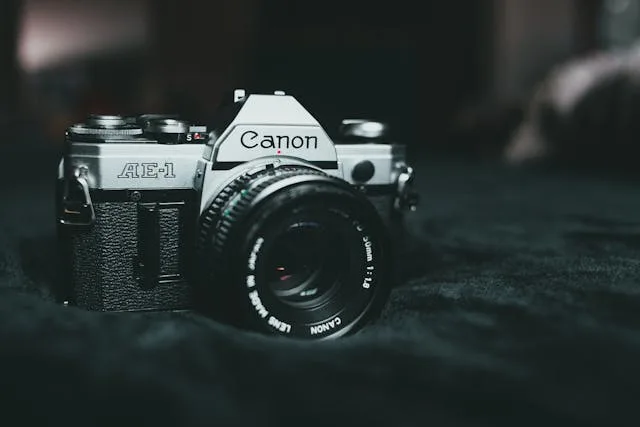 The Canon AE-1 Program remains a top pick for beginners thanks to its easy auto/manual modes.
One of the most iconic film cameras ever made, the Canon AE-1 Program balances automation with creative control. It’s intuitive, dependable, and produces sharp, punchy results. This is the perfect beginner camera that doesn’t feel like a beginner’s tool.
Type: 35mm SLR
Features: Auto + manual exposure, electronic shutter
Price: ~$300–$450 AUD
Best for: Beginners who want both automation and learning potential
If you’re ready to get one, check out this Canon AE-1 listing on eBay.
Pentax K1000
 The fully manual Pentax K1000 is a go-to learning tool for film photography.
The K1000 is a cult classic, famous for its durability and no-nonsense manual controls. It forces you to learn aperture, shutter speed, and ISO, making it one of the best film cameras for building your fundamentals.
Type: Fully manual 35mm SLR
Features: Needle meter, robust build
Price: ~$350–$500 AUD
Best for: Complete beginners who want to learn film photography manually
Here’s a good Pentax K1000 listing on eBay.
Olympus OM-10
 Sleek and lightweight, the Olympus OM-10 is made for travel-friendly film photography.
Stylish, compact, and well-built, the Olympus OM-10 is ideal for travel and street photography. It features aperture-priority auto mode and can be upgraded with a manual adapter.
Type: Aperture-priority 35mm SLR
Features: Compact design, accurate metering
Price: ~$250–$400 AUD
Best for: Lightweight, creative shooting on the go
You can find it from Classic Cameras Australia or this OM-10 listing on eBay.
Minolta X-700
 A versatile film camera that adapts with your skills — the Minolta X-700.
This is a flexible film camera that grows with you. It offers full program mode, aperture-priority, and manual operation. Paired with Rokkor lenses, it delivers excellent image quality.
Type: 35mm SLR
Features: Auto + manual control, large bright viewfinder
Price: ~$400 AUD
Best for: Beginners who want something they won’t outgrow
Here’s a quality Minolta X-700 on eBay.
Nikon FE / FM Series
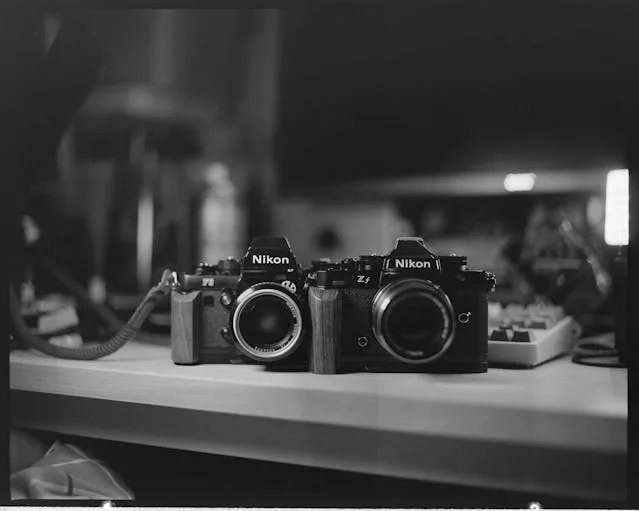 Built to last — Nikon’s FE/FM series remains a favourite among enthusiasts.
Built like a tank and loaded with Nikon’s sharp lenses, the FE and FM cameras are excellent choices for serious learners. The FE includes aperture-priority auto, while the FM is fully manual.
Type: 35mm SLR
Features: Rugged build, precise controls
Price: ~$400–$500 AUD
Best for: Those who want a long-lasting camera
If you’re interested in the Nikon system, check out this FM2 listing on eBay, or dive deeper into the Nikon F3 review.
Yashica Electro 35 GSN
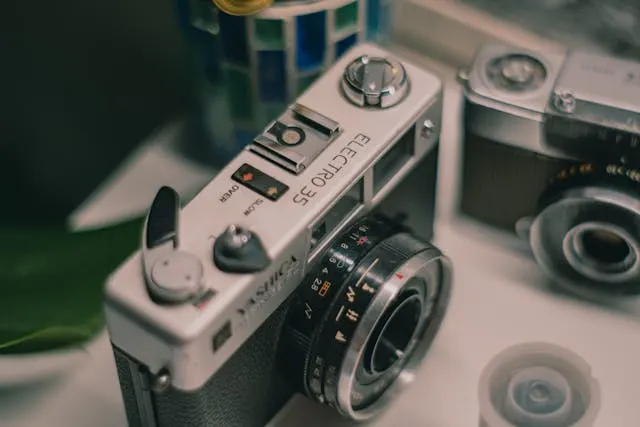 A quiet classic for street photography — the Yashica Electro 35.
This fixed-lens rangefinder is a street shooter’s dream. It’s quiet, fast, and the 45mm f/1.7 lens is incredibly sharp.
Type: 35mm Rangefinder
Features: Fixed lens, aperture-priority
Price: ~$250–$350 AUD
Best for: Street, documentary, and everyday photography
Here’s a working Electro 35 GSN on eBay with battery adapter included.
Canon Sure Shot / Nikon L35AF
 The Canon Sure Shot is a simple, no-fuss option for point-and-shoot film fans.
These compact point-and-shoots are perfect if you just want to load film, point, and capture the moment. They’re lightweight, reliable, and produce great results.
Type: 35mm Point & Shoot
Features: Autofocus, built-in flash
Price: ~$150–$300 AUD
Best for: Snap-and-go shooting, travel
Here’s a solid Nikon L35AF example on eBay.
Understanding the Different Film Formats: 35mm vs. Medium Format
If you’re new to film photography, you’ve probably seen terms like “35mm” and “medium format” used often. Most
beginner-friendly film cameras under $500 in Australia are 35mm, and for good reason. But it’s helpful to know what sets them apart.
35mm film
is the standard format for beginners. It’s widely available, affordable, and works with a huge variety of cameras, from SLRs to point-and-shoots. With 24 or 36 exposures per roll, it’s perfect for learning how to frame, focus, and expose without too much pressure.
Medium format, on the other hand, offers higher resolution and deeper tonal range. Cameras that use 120 film produce larger negatives, great
for dramatic landscapes or editorial-style portraits. But they also come with a learning curve: fewer exposures (usually 10–16 per roll), slower shooting pace, and often higher cost.
While medium format cameras like the Mamiya RB67 or Pentax 645 can produce beautiful results, they’re harder to find under $500 and aren’t
typically recommended for first-time shooters unless you’re ready to commit to a steeper workflow.
For most Australian beginners exploring places like Byron Bay, Hobart, or Fremantle, a well-maintained 35mm SLR or rangefinder is the perfect gateway into the world of film.
Still unsure? Start with 35mm. You’ll gain experience quickly, and your rolls will go further, literally and creatively.
How to Build Confidence as a Beginner Film Photographer
Starting film photography can feel overwhelming, especially when every frame counts. But confidence grows with practice, and with a few simple habits, you can fast-track your learning without losing the magic of the process.
First, track your settings. Bring a small notebook or use your phone to jot down your shutter speed, aperture, and lighting conditions for each shot. When your scans come back, you’ll be able to understand what worked and why.
Second, embrace mistakes. Underexposed shots, soft focus, light leaks, they’re part of the learning curve. Even professional photographers like Nick Karagiannis admit their early rolls were full of flaws. “It wasn’t about getting it right,” Nick says. “It was about starting.”
Third, shoot with intention. Film teaches you to slow down. Don’t rush through your roll. Wait for good light. Consider your composition. Ask yourself why you’re taking the photo before you click.
Finally, join a local community.
Whether it’s FilmNeverDie events in Melbourne or casual photo walks in Brisbane, connecting with other analog shooters will boost your confidence and open up new creative pathways.
Remember, you don’t have to master everything at once. Just load your roll, frame your shot, and enjoy the process. Film photography is about seeing, not just what’s in front of you, but how you respond to it.
Essential Accessories for Beginners
To get started, make sure you also pick up:
Film: Kodak Gold for colour, Ilford HP5 Plus for black and white
Lens cleaning kit
Spare batteries (for cameras with light meters)
Camera bag or strap
Small notebook to track settings
Stores like Walkens and Vanbar Imaging are great for ordering in Australia.
Where to Buy Film Cameras in Australia
eBay AU: Huge selection, just check seller reviews
Gumtree & Facebook Marketplace: Local pick-up options
Classic Cameras Australia: Quality-tested gear
FilmNeverDie: Melbourne-based store and lab
Camera fairs: Found in cities like Melbourne, Brisbane, and Sydney
What to Check Before Buying Used
Before buying a used film camera:
Make sure the light meter works
Check the shutter fires correctly
Ensure the lens is free of haze, fungus, or scratches
Inspect the battery compartment for corrosion
Test the film advance and rewind
You can also get gear professionally serviced — Nick Karagiannis recommends doing this early so you can shoot with confidence.
Quick Comparison Table
| Camera | Type | Auto Mode | Price Range (AUD) | Best For |
|---|---|---|---|---|
| Canon AE-1 Program | 35mm SLR | Yes | $300–$450 | Balanced auto/manual |
| Pentax K1000 | 35mm SLR | No | $350–$500 | Full manual learning |
| Olympus OM-10 | 35mm SLR | Yes | $250–$400 | Lightweight travel shooting |
| Minolta X-700 | 35mm SLR | Yes | ~$400 | Growing with your skills |
| Nikon FE/FM | 35mm SLR | Partial | $400–$500 | Long-term durability |
| Yashica Electro 35 GSN | Rangefinder | Yes | $250–$350 | Quiet street photography |
| Sure Shot / Nikon L35AF | Point & Shoot | Yes | $150–$300 | Casual snapshots |
FAQs
Can I still develop film in Australia?
Yes. Labs like Hillvale, Rewind Photo Lab, and Ikigai Film Lab accept mail-ins. Many local photo stores still process film too.
What film should I start with?
For colour: Kodak Gold or Fuji C200. For black and white: Ilford HP5 Plus.
Can I fly with film?
Yes, but avoid x-rays. Ask for a hand check at airport security — especially for ISO 400+ film.
Final Thoughts
Film photography is more than a format — it’s a mindset. With under $500 AUD, you can grab a camera that not only teaches you the craft but also delivers beautiful, tangible results.
From Bondi Beach to the Blue Mountains, Australia is a dream for film shooters. Just ask Nick Karagiannis — the beauty of film is alive and thriving.
So go on, grab your first roll and start capturing the world one frame at a time.