The magic of vintage film photography in a digital world by Nick Karagiannis
Why film photography is still important
In today’s fast-paced digital world, where smartphone cameras deliver instant results and AI enhances every image, film photography remains a unique and irreplaceable art form. Unlike digital photography, film photography requires patience, skill, and a deep appreciation for craftsmanship. Every frame is intentional, every shot a moment filled with anticipation, and the end result is a faithful representation of light, texture, and emotion.
Vintage camera collector and nature photography expert Nick Karagiannis has spent years mastering the art of analogue photography. From the legendary Canon AE-1 to a rare Soviet-era Zenit model, his camera collection is more than just a hobby: it’s a testament to the timeless beauty of film. But in the digital age, why is film still so important?
The unique aesthetics of the film
Film photography has a unique visual appeal that digital cameras just can’t replicate. Its organic grain, subtle tonal variations, and soft highlights exude a timeless and authentic beauty. Some of the most celebrated photographers still choose film for its depth, richness, and natural capture of light.
The Slow Intentionality of Film
At the heart of Nick’s practice is a belief that photography should be lived, not just produced. Film photography slows everything down, and in doing so, it makes room for meaning.
Why Slower Is Often Better:
- You consider your framing more carefully
- You learn to read light by feel
- You spend less time reviewing, more time observing
- You think in sequences and stories, not just snapshots
“Shooting 36 frames on a roll makes each one count,” Nick explains. “You stop chasing quantity and start listening to quality.”
In Sydney, where visual overstimulation is the norm, glass buildings, LED signs, constant movement, film becomes a calming force. Nick often walks through areas like Newtown or Surry Hills with just one camera and one lens, using every frame like a sentence in a slow-moving poem.
The Look of Film: Character You Can’t Emulate
While digital presets can mimic film stocks, Nick believes the soul of vintage film photography isn’t just in its colours or contrast curves, it’s in the experience behind the image.
“Film doesn’t just show what something looked like. It shows what it felt like.”
Each stock behaves differently. Portra breathes with warmth. Tri-X reveals strength in shadow. HP5 tells soft stories. And it’s not just the tones, it’s the grain, the halation, the chemical fingerprints that give each image a texture you can feel.
Film Lives in Imperfection:
- Light leaks
- Frame overlaps
- Grain that shifts across the roll
- Accidental softness from manual focus
Rather than “fixing” these things, Nick embraces them. He views them as echoes of the physical process, traces of presence, not flaws.
The Role of Film in the Age of Instant
In a world where smartphones capture 100 images before breakfast and AI can generate entire photorealistic scenes in seconds, Nick sees film not as a rebellion, but as a quiet act of clarity.
“Film gives you permission to be human again,” he says. “You don’t have to be perfect. You just have to feel it.”
This mindset has influenced how he teaches photography, especially to younger generations. Instead of starting with megapixels and editing software, he encourages them to begin with a single roll and no screen.
Students learn:
- To wait for light
- To accept mistakes
- To value restraint
- To focus on intention, not perfection
Many of these lessons are shared in his public workshops and writings, including the 35mm Film Photography Guide, which helps newcomers begin their analogue journey with confidence and emotional purpose.
Different film stocks for different moods
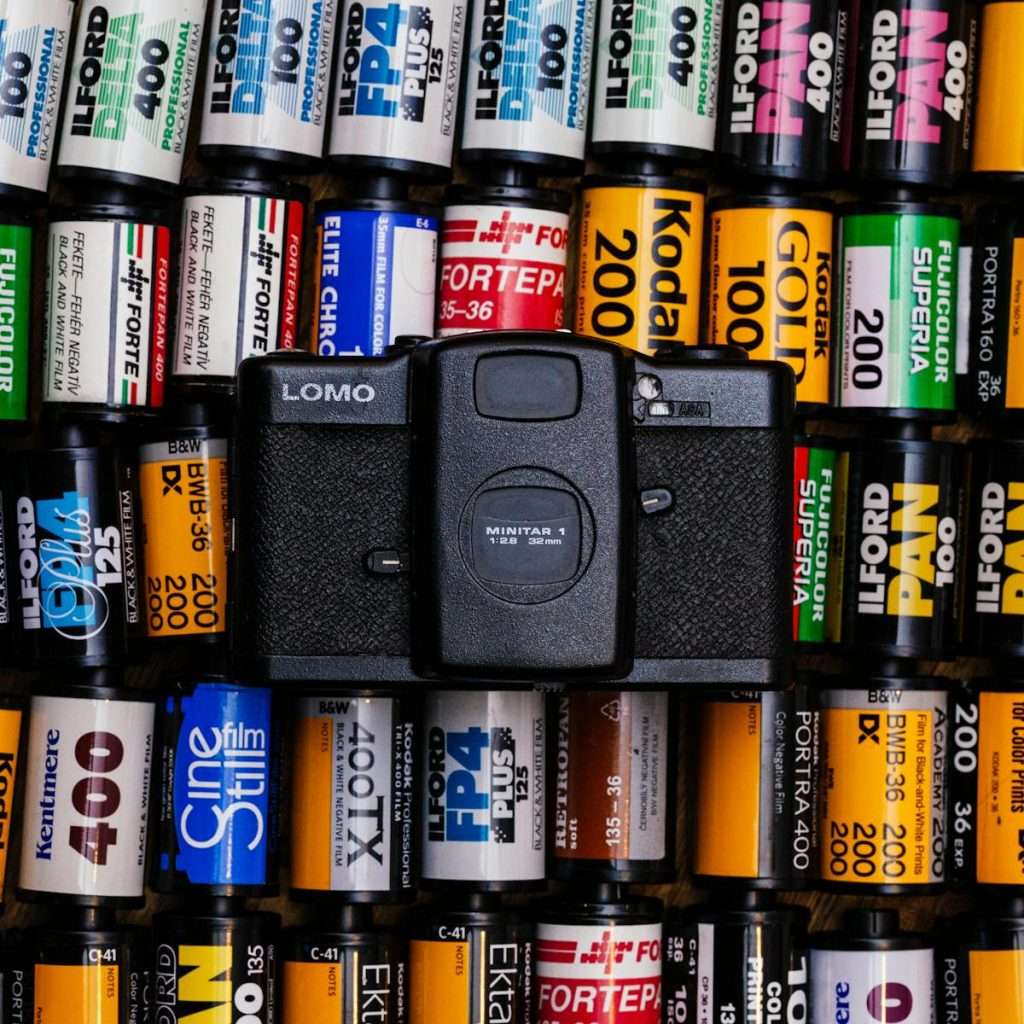 Photo by Balázs Benjamin on Pexels
Every film has its own personality. Whether you’re looking for vibrant, high-contrast landscape photos or soft, dreamy portraits, there’s a film for every mood.
- Kodak Portra 400 — Warm, balanced tones, ideal for natural light portraits and landscapes.
- Ilford HP5 Plus 400 — A classic black and white film known for its flexibility and ability to produce photos with incredible detail.
What Nick Packs in His Everyday Film Kit
Nick’s love for vintage film photography is supported by a carefully curated set of tools, all of them mechanical, durable, and steeped in history. Each camera tells a story, and each is selected based on mood, location, and light.
A Peek Inside His Kit:
- Leica M3 – For slow, deliberate portraiture and street walks
- Nikon F2 – A tank for faster-paced shooting in changing light
- Pentax Spotmatic – For delicate texture work and contemplative frames
- Canon AE-1 – A student favourite, and often loaned out during workshops
- Olympus XA – His go-to for pocket-sized spontaneity
All of these form the heart of the Nick Karagiannis vintage camera collection, a growing archive of cameras, lenses, and stories.
Rediscovering Vintage Cameras
An essential part of the film photography experience is the camera itself. Unlike modern digital cameras, which often feel like computers, vintage film cameras are pure mechanical works of art, built to last and precision-engineered.
Nick Karagiannis’ favorite vintage camera finds
For collectors and enthusiasts, finding the right vintage camera is an adventure in itself. Nick’s top picks are:
Canon AE-1 — Legendary entry-level SLR, full manual control.
Minolta SR-T 101 — Known for its sturdy build and excellent metering system.
Rolleiflex TLR — Medium format twin-lens reflex camera used by iconic photographers.
Nikon F3 — Professional film camera.
PENTAX K1000 — Affordable, durable and perfect for learning manual photography.
Home Film Development: A Lost Art
In the digital age, most people never get to experience the thrill of developing their own photos, but for true film enthusiasts, home processing is a magical process: watching a photograph come to life on a negative is an experience that connects photographers to their photography roots.
How to get started developing film at home
- Gather the supplies you need. You will need a Patterson developing tank, film chemicals, measuring equipment, and a darkroom bag.
- Choose your film type. Start with black and white film, which is easier to develop than color film.
- Follow the process. Development consists of developer → stop bath → fixer, → rinse.
- Scan the negatives. Once dry, you can digitize the film using a scanner or DSLR.
Home development not only saves money, it also gives the photographer complete control over the creative process.
 A moment of yearning and closeness as two hands stretch towards one another, a theme central to Nick Karagiannis’ artistic vision
Film Is Emotional Storytelling, Not Just Image-Making
Nick Karagiannis doesn’t shoot film just to make pictures. He uses it to make sense of things, to explore questions, memories, and moods that don’t fit neatly into pixels or presets.
“Film doesn’t care if you nail the focus. It cares if you told the truth.”
He often approaches film projects like short stories. Each roll is a chapter, each frame a sentence. Whether photographing abandoned spaces, quiet urban rituals, or small-town stillness, the goal isn’t visual perfection; it’s emotional clarity.
How Nick Builds a Story Through Film:
- One camera, one film stock, one subject, consistency creates cohesion
- Revisits locations multiple times, capturing different light, mood, and silence
- Shoots in sequences, allowing space for emptiness, pauses, and incomplete thoughts
His photo series The Longing Season was shot entirely on Portra 160 and Tri-X 400 in rural NSW towns. No central subject, just subtle moments: laundry drying, rusted signs, tea left to cool in a window. The photos weren’t loud, but they lingered.
What Film Offers That Digital Doesn’t
While Nick values digital for its speed and flexibility, he believes film gives photographers something increasingly rare: a psychological reset. The act of loading a roll, setting your ISO, focusing manually, and waiting days (or weeks) to see the results fosters a kind of presence that modern devices often steal.
“With digital, we chase control. With film, we surrender to experience.”
Emotional Benefits of Shooting Film:
- Slower pace lowers anxiety
- Limited frames reduce creative pressure
- The wait builds a connection to the moment
- Mistakes become part of the message
- You start to see, not just look
Nick encourages photographers stuck in a digital rut to spend a week with film only. No screen review. No histogram. Just eyes, hands, and heart. Most, he says, come back changed.
Archiving the Tangible: The Importance of the Physical
Unlike digital files, film photography results in physical artefacts, negatives, contact sheets, and envelopes scribbled with notes. Nick Karagiannis sees these as part of the art. They’re not waste. They’re witness.
He stores his negatives chronologically in archival binders, with location, date, emotional state, and film stock logged in a small paper journal. Each roll is its own time capsule.
“In twenty years, I won’t scroll back through Lightroom. I’ll open a folder. I’ll smell the paper. That’s real memory.”
Many of his favourite prints are made from 35mm or medium format negatives that sat untouched for months, sometimes years, until the right emotional project found them.
Nick Karagiannis: Preserve the tradition of film photography
Despite living in a digital world, film photography continues to thrive because of its artistic value, craftsmanship, and authenticity. It offers something digital doesn’t: a deeper connection to the photographic process.
Nick Karagiannis Photography provides insights, tutorials, and expert guidance to those passionate about the world of vintage cameras, film stock, and analog photography. Whether you’re a beginner or a seasoned photographer, embracing film is a journey worth taking.
Are you ready to experience the magic of film photography? Let’s help preserve this timeless art by checking Nick Karagiannis’s blog about The Timeless Charm of Vintage Photography – The Nick Karagiannis Guide
 A moment of yearning and closeness as two hands stretch towards one another, a theme central to Nick Karagiannis’ artistic vision
From Passion to Practice: Nick Karagiannis on Teaching the Next Generation of Film Photographers
For Nick Karagiannis, vintage film photography is more than a personal pursuit, it’s a craft to be preserved, shared, and passed on. As digital photography dominates education and commercial work, Nick has carved out a unique role in the Australian photography scene by creating space for analogue learning. Through workshops, mentorship walks, and hands-on tutorials, he helps others slow down and reconnect with the fundamentals of storytelling through film.
Nick’s approach to teaching isn’t technical-first. Instead of leading with gear specs or metering jargon, he begins with purpose: Why do you shoot? What are you trying to say? What emotions do you want to preserve? This philosophy helps beginners move past the fear of imperfection and embrace the expressive nature of analogue.
His most popular offering is the “One Roll Walk,” where students in cities like Sydney or Adelaide meet with Nick, choose one camera and one film, and shoot together in real time. These walks include live demonstrations of metering by eye, composing in-camera, and reading light intuitively rather than relying on screens. Afterward, Nick helps them process the film, scan the negatives, and reflect on the results, often discussing not just technique, but emotional intent.
What makes these sessions stand out is the human connection. Many of Nick’s students are burnt out from social media, overwhelmed by presets, or creatively stalled. Film photography becomes a reset button, and Nick acts as both guide and collaborator. His ability to blend photographic wisdom with emotional support makes his mentorship deeply personal.
In a world where everything is optimized for speed, Nick offers the opposite: presence, patience, and practice. He hopes that more photographers, especially younger ones, learn to appreciate photography as more than content production. Instead, he wants them to see it as a form of storytelling rooted in truth, feeling, and time.
“Film is just the medium,” Nick says. “What matters is that it slows you down enough to see something real.”
Whether you’re just starting your journey or rediscovering film after years away, Nick Karagiannis invites you to not just shoot, but to feel, to remember, and to tell stories that matter. And in doing so, to keep the heart of photography alive.
Vintage Film Photography with Nick Karagiannis
What’s the difference between 35mm and medium format film?
35mm film is more common, more affordable, and easier to load. Medium format offers higher resolution and smoother tonal transitions due to its larger negative size. Nick uses both, often reserving medium format (like the Rolleiflex TLR) for portraits or gallery work where image detail is paramount.
Why do some people prefer film over digital despite the inconvenience?
Film photography creates a slower, more mindful process. You can’t shoot endlessly. You think before you act. Nick believes this limitation breeds creativity. “With film, you’re not just snapping — you’re composing with intent.”
Can I still buy film locally in Australia?
Yes. Most major Australian cities have reliable stockists and online suppliers. Local favourites include:
FilmNeverDie (VIC)
Walkens House of Film
Rewind Photo Lab (NSW)
Vanbar Imaging
These stores carry both fresh and expired rolls, as well as developing supplies.
Does shooting film help me become a better photographer?
In many cases, yes. Film forces you to:
Understand light without a histogram
Meter intentionally
Accept mistakes and learn from them
Nick often sees dramatic growth in students after just one roll.
How long does it take to get film developed in Australia?
Turnaround varies. Some labs offer same-day service for colour C-41 film, while black-and-white or push-processed rolls might take 3–5 days. Nick recommends building a rhythm: shoot weekly, develop monthly.
What vintage camera should I buy first?
Nick’s top beginner picks:
Canon AE-1 — Reliable, widely supported
Pentax K1000 — Fully manual and simple
Olympus OM-1 — Compact and lightweight
Nikon FE — Classic build with auto exposure
He suggests purchasing from sellers who test and service their gear, or visiting trusted camera stores in Melbourne and Sydney.
How do I choose a film stock that suits my style?
Ask yourself: what mood are you after?
Warm and emotional? → Kodak Portra 400
Gritty and contrasty? → Kodak Tri-X 400
Soft and honest? → Ilford HP5 Plus
Nick advises sticking to one film for several rolls so you can learn its look deeply before experimenting.
Is home development worth learning?
Absolutely. It’s cost-effective and deepens your understanding of exposure and contrast. Nick says it “completes the circle” — from shot to negative. He suggests starting with black-and-white development, which is less sensitive and forgiving.
Can I travel with film safely through airport security?
Yes, but always ask for a hand check at X-ray machines. High-speed films (ISO 800+) are especially vulnerable. Nick recommends carrying film in a clear zip bag, with boxes labeled. Most Australian airports accommodate photographers who ask politely.
What if I mess up an entire roll?
That’s part of the process. “Failure is built into the experience,” Nick says. Every ruined roll teaches something — about metering, patience, or presence. Keep a journal. Learn from the imperfections.
How should I store developed negatives?
Use archival sleeves and binders. Keep them in a cool, dry space. Label them with location, date, and stock used. Nick stores his with emotional notes: what he felt, why he shot it, what he learned. These become stories, not just records.
Is there a future for film photography, or is it just nostalgia?
Nick believes film has a strong future, not as the dominant format, but as a meaningful counterbalance. “In a screen-saturated world, film gives us something we can touch, keep, and feel.”